Black Mold?
Don't Take Chances! Call the Top Black
Removal Company in Lenexa and get cleaned up FAST!



Why Choose Us?
- Certified Pros
- Available 24/7/365
- Rapid Response
- Fully Licensed And Insured
- We Work With Your Insurance Company
Call Now (913) 904-5020
Professional Mold Removal in Lenexa, Kansas
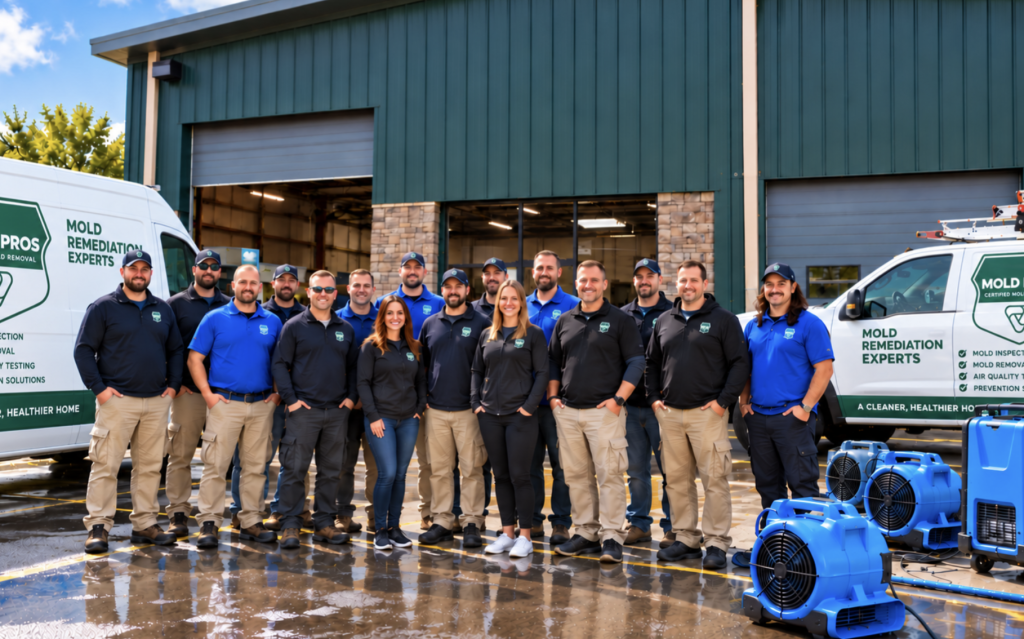
Mold removal starts with finding and controlling the moisture that allowed growth to begin. Our team at Lenexa Mold Remediation Pros focuses on safe work areas, careful material decisions, and thorough cleaning. We serve homes, apartments, offices, and other buildings in Lenexa and nearby communities. The first visit should give you a clearer plan for what needs attention and what can remain in place.
What Happens During Mold Removal
We begin by reviewing the visible damage, moisture history, and areas that could hide affected materials. Moisture sources often include roof leaks, plumbing failures, HVAC condensation, storm entry, or slow drying after water damage. Finding that source matters because cleaning mold without correcting moisture often leads to recurrence. We look at nearby rooms and building materials before defining the work area.
The work plan usually separates affected areas from clean areas. Containment means using plastic walls and barriers to keep mold dust from spreading during removal. We also plan worker access, equipment placement, waste handling, and air movement before disturbing damaged materials. Unaffected surfaces receive protection so the cleanup stays focused.
Our technicians use appropriate personal protective equipment for the work conditions. HEPA air scrubbers filter mold dust from the air while removal and cleaning take place. We control the moisture source and use methods suited to the material being treated. These steps reduce the chance of spreading particles into occupied parts of the building.
How We Decide What Gets Cleaned or Removed
Porous materials absorb water and often hold contamination below the visible surface. Drywall, insulation, carpet, and some ceiling materials may need removal when growth or water damage reaches them. Removing these materials helps expose the structure and prevents hidden moisture from remaining inside walls or floors. We keep the work as limited as the conditions allow.
Hard, nonporous surfaces often receive cleaning when they remain structurally sound. Concrete, tile, metal, and some finished framing can sometimes be cleaned with suitable methods. Subflooring and unfinished wood require closer review because moisture can travel into seams, joints, and layers. Cleaning is not the same as simply wiping away visible marks, since the surface must also dry properly.
Carpet and padding present separate challenges because fibers and backing can hold moisture. Insulation can also trap water and mold inside wall cavities, attics, or crawl spaces. Framing may be cleaned when it is sound, accessible, and able to dry fully. Damaged materials that cannot be reliably cleaned are handled as removal items within the approved scope.
Containment, HEPA Filtration, and Careful Removal
Containment protects the rest of the building while affected materials are opened or removed. We plan barriers around the work area and limit unnecessary movement through it. Air scrubbers support the containment plan by filtering airborne particles during active work. They do not replace source control, safe removal, or surface cleaning.
Careful removal helps reduce dust and prevents unnecessary disturbance of hidden areas. We use controlled methods for drywall, insulation, carpet, and other affected porous materials. Removed material is packaged and moved through a planned path instead of being carried loosely through the building. The goal is to leave the surrounding area cleaner and more stable than we found it.
Hard surfaces are cleaned with methods appropriate for their condition and finish. We pay attention to framing, concrete, tile, duct-adjacent surfaces, and other areas near the original moisture source. Visible dust and residue receive detailed attention after removal is complete. The area must then be dry enough for the next building step.
Lenexa Building Conditions That Shape a Project
Lenexa buildings can have very different moisture problems because the community includes older properties, newer construction, apartments, medical facilities, and commercial districts. An older home may have a crawl space, aging roof, or hidden plumbing leak. A newer building may have moisture trapped behind finishes after construction or remodeling. The building type changes how we access, contain, and clean the affected area.
Storm damage can introduce water through roofs, windows, walls, or doors after heavy rain, hail, or wind. Blocked gutters and roof drains can also direct water toward foundations and lower floors. In areas near urban drainage features, runoff and localized flooding can affect crawl spaces or basements. These conditions make moisture removal and drying part of a sensible remediation plan.
Commercial work often involves more rooms, occupants, equipment, and scheduling concerns than a small residential project. Offices, retail spaces, schools, churches, and medical facilities may need careful separation between work areas and active operations. Mechanical rooms, restrooms, kitchens, and commercial roofs can also contain difficult-to-find moisture sources. We organize the scope around access, affected materials, and the need to limit disruption.
Black Mold Concerns and Material Safety
People commonly use the term black mold for dark-colored growth, but color alone does not identify the species. A dark patch should not be diagnosed by appearance or treated as a special species based only on its color. The practical concerns are moisture, material damage, spread, and safe handling. We focus on those conditions when planning cleanup and removal.
Do not scrape or sand a large area before the work plan is clear. Disturbing growth can release dust and spread debris into nearby rooms. Small surface spots can also sit over wet drywall, insulation, or framing. If you are unsure what you found, our mold warning signs guide explains what to look for and what to do next.
Testing is not a service we provide, but independent testing or assessment can help when the extent or type of a problem needs independent documentation. Testing does not replace moisture control or physical removal when damaged materials are present. A visual review and moisture investigation often guide the immediate work scope. Health questions should be directed to your doctor or a public-health professional.
Project Scope, Timing, and Cost Factors
Job length depends on the size of the work area, the number of materials involved, and how easily the source can be corrected. A contained room with limited drywall damage follows a different path than a crawl space, attic, or commercial water loss. Access, drying needs, contents, and hidden cavities can add work steps. We explain the planned sequence before removal begins.
Actual mold remediation costs vary based on affected materials, work-area size, containment needs, access, and the moisture source. An inspection is needed before a final scope and price can be provided. Drywall, insulation, carpet, subflooring, framing, and hard surfaces each require different labor and handling. A larger visible area does not always show the full extent of the work.
Occupants do not automatically need to leave every property during remediation. That decision depends on the work area, building layout, occupants, air movement, and the amount of material being disturbed. We can explain which rooms should remain closed during active work. People with health concerns should ask their medical provider about their individual situation.
Residential and Commercial Remediation Planning
Residential projects often center on protecting daily living spaces and limiting disruption to the household. We consider bedrooms, kitchens, bathrooms, crawl spaces, attics, and shared air paths. Furniture and belongings near the work area may need protection or temporary movement. Clear access helps the project proceed with fewer interruptions.
Commercial projects require added attention to employees, customers, tenants, and building operations. A containment plan may separate an office suite, mechanical room, hallway, or tenant area from the active work zone. Business owners should identify critical equipment, access rules, and scheduling limits before work starts. This information helps shape a practical sequence without assuming every building can use the same approach.
Our mold removal scope addresses the affected materials and surfaces identified during the project. Rebuilding, painting, flooring replacement, or finish installation may require separate planning after remediation is complete. The building must be dry and the affected area must be ready before reconstruction decisions make sense. We explain the boundary between remediation work and later finish work during scope discussions.
If you see recurring growth, a musty odor, or water damage that did not dry, call Lenexa Mold Remediation Pros at (913) 904-5020. Tell us what happened, where the problem is located, and whether the area is still wet. Photos can help describe the situation before an on-site review. We will help you understand the next practical step without asking you to disturb the affected materials.
Frequently Asked Questions
Can mold be removed without replacing drywall?
Sometimes, but the answer depends on how far moisture and growth entered the drywall. Surface cleaning is not enough when the material is soft, swollen, or affected through its paper layers. We review nearby framing, insulation, and the moisture source before deciding. Keeping sound material can reduce unnecessary removal when cleaning and drying are reliable.
Should I clean mold before calling a remediation company?
Avoid scrubbing, sanding, or cutting into a larger affected area before the scope is understood. Disturbing the material can spread dust and hide the true extent of the damage. You can stop the water source if it is safe and move unexposed items away from the area. Keep the space closed and describe the condition when you call.
What happens if the moisture source is still active?
Remediation should account for the source before affected materials are cleaned or removed. Active leaks, condensation, or drainage problems can damage newly cleaned areas. We identify the known moisture condition and explain what must be corrected for the space to stay dry. Repairs outside the remediation scope may require another qualified trade.
Can you work in an occupied home or business?
Some contained projects can proceed while other parts of the property remain occupied. The decision depends on the work area, containment design, air movement, and the amount of material being disturbed. Rooms within or next to the work zone may need to stay closed. We discuss access and occupant limits before active removal begins.